AI-native operating model

Transform commerce operations by governing the agents first.

HARNEXA does not sell generic AI transformation. It builds an operating model for European commerce teams: one workflow, one evidence packet, one governed agent path, and one AgentOps cadence that survives procurement review.

Transformation thesis

AI-native means the operating controls are native too.

The buyer should never have to choose between speed and control. HARNEXA sequences useful agent work through evidence gates so retail, CPG, data, and risk teams can inspect the same system.

Workflow first

Start from one commerce workflow, not a generic AI program.

HARNEXA selects a named retail, CPG, or governance workflow with an owner, baseline, data path, approval boundary, and buyer committee.

PRISM score, workflow owner, KPI baseline, stack context, and recommended sprint path.
Harness enforced

Every agent runs through identity, permission, budget, approval, sensors, and audit.

The model never receives raw tool power. HARNEXA Harness scopes what an agent can read, propose, approve, execute, log, and never do alone.

Agent identity record, tool allowlist, risk class, approval event, sensor checks, and append-only audit row.
AgentOps cadence

Deployment is not the finish line. Agent operations become the product.

Every governed workflow needs ongoing CLEAR evaluation, audit review, cost monitoring, drift checks, risk review, and revocation practice.

AgentOps report, CLEAR scorecard, open-risk list, usage band, run replay, and next-action review.
Protocol ready

Protocols are sequenced only after evidence gates hold.

GEO/AVO, MCP, WebMCP, A2A, UCP, ACP, AP2, and x402 are treated as operating boundaries, not labels to paste onto a deck.

Protocol Atlas, AVO memo, readiness passport, and public no-execution boundary.
NEXUS agent roster

Specialist agents are useful only when their contracts are visible.

The public story should make the operating pattern explicit: specialist agents draft, score, inspect, or package evidence. Commercial commitments remain founder-reviewed and approval-gated.

HERMES

Research and market intelligence

READ_ONLY signals and briefs

Source validation, daily signal log, and founder action list.
ATLAS

Founder-reviewed proposal draft

Never sends proposals autonomously

Draft status, offer selection, price range, and governance commitment.
ARGOS

Delivery risk detection

Client update drafts only

Risk flags, milestone state, and pre-call brief.
THEMIS

EU AI Act and GDPR governance support

Legal review foundation, not certification

Intended purpose, oversight, risk classification, and monitoring plan.
PHANTOM VSA

CPG field-sales visit package

Proposes orders, never submits them alone

Suggested order lines, approval gate, audit trail, and CLEAR score.
PRISM

Readiness scoring

Browser-local until the buyer consents

0-100 score, top gaps, exposure indication, and handoff URL.
ORACLE

Trajectory evaluation

Scores quality, never approves commercial action

CLEAR scorecard, regression notes, and drift review.
FORGE / BRIDGE / AURIS

Architecture, integration, and compliance packaging

Design and documentation support behind founder review

Architecture draft, integration spec, and dual-framework packet.

Buyer evidence loop

Move from curiosity to a governed sprint without exposing execution.

The customer experience should qualify serious demand and preserve context. Each step adds evidence without asking the buyer to hand over private credentials or authorize live writes.

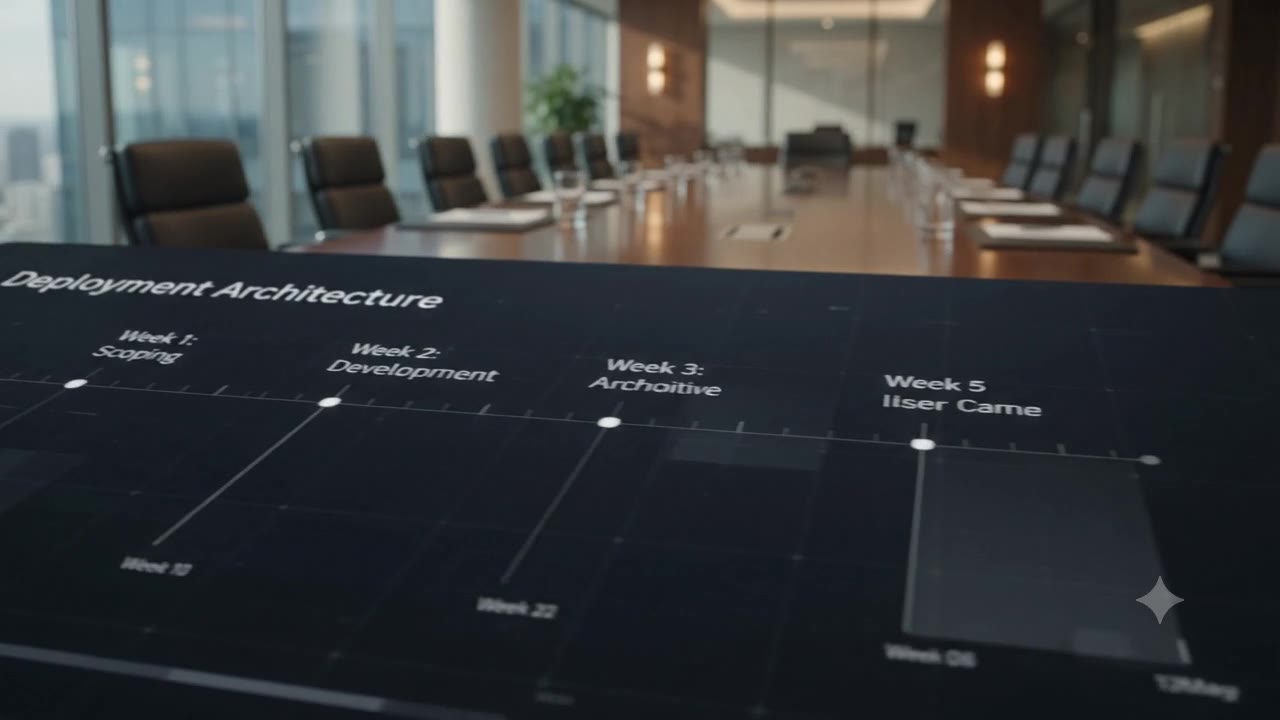
Deployment sequenceThe transformation path is staged before execution begins.Readiness, architecture, development, launch boundary, and operating review are sequenced so AI-native work does not skip governance.
  1. Score

    Run PRISM against a real workflow

    Quantify whether the workflow has the governance, data, human boundary, measurement, and execution readiness to justify a sprint.

    Open score step
  2. Evidence

    Inspect the proof room

    Review synthetic PHANTOM proof, AgentOps evidence, trust artifacts, processor materials, and the legal-review boundary.

    Open evidence step
  3. Protocol

    Sequence protocol readiness

    Use the Protocol Atlas to separate GEO/AVO work, private MCP-style pilots, WebMCP review, and deferred checkout or payment rails.

    Open protocol step
  4. Passport

    Package the buyer artifact

    Combine PRISM, evidence, protocol, and buyer role context into a Commerce Readiness Passport before founder review.

    Open passport step
  5. Review

    Request the right sprint

    Route the evidence into ATLAS intake for a diagnostic, AVO sprint, deployment sprint, EU sprint, or AgentOps retainer.

    Open review step

Non-negotiable boundaries

The operating model is credible because it says what will not happen.

Turn AI-native ambition into one governed commerce workflow.

Start with PRISM if the workflow is unclear. Start with founder review if the workflow, data access, KPI baseline, and approval boundary are already visible.